Quick Answer
Social media management is the ongoing process of planning, creating, publishing, and analyzing content across platforms like Instagram, Facebook, LinkedIn, and TikTok to build brand awareness, engage audiences, and drive measurable business results. In 2026, it’s no longer just about posting – it’s about combining content strategy, community engagement, paid promotion, and data-driven optimization to turn followers into customers.
Aspect | Details |
What it includes | Content planning, creation, scheduling, community management, analytics, paid ad support |
Best platforms (2026) | Instagram, TikTok, LinkedIn, Facebook, YouTube Shorts |
Posting frequency | 3–5x/week per platform (quality over quantity) |
Core goal | Brand visibility → engagement → conversions |
Who needs it | Small businesses, startups, ecommerce brands, service providers |
DIY vs Professional | DIY works short-term; professional management scales faster with less owner time spent |
What Is Social Media Management, Really?
Social media management covers everything that happens on a brand’s social channels – but most business owners only see the visible 10%: the posts. The other 90% is strategy work that determines whether those posts actually convert.
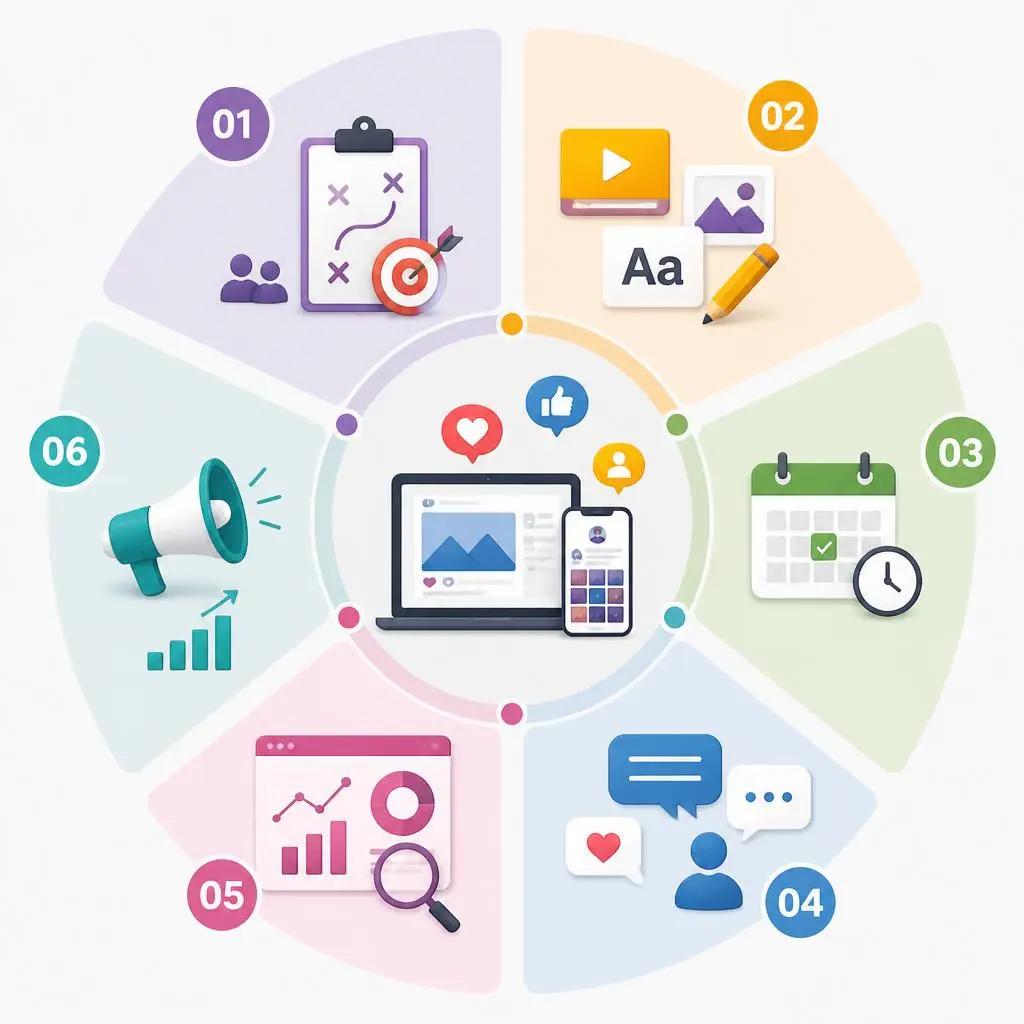
A real social media management process includes:
- Content strategy – deciding what to post, when, and why, based on audience behavior and business goals
- Content creation – graphics, videos, captions, and copy tailored to each platform’s format
- Scheduling & publishing – consistent posting using tools that maintain optimal timing
- Community management – replying to comments, DMs, and mentions to build trust
- Analytics & reporting – tracking what’s working and adjusting strategy monthly
- Paid social support – boosting high-performing content to reach beyond organic limits
Why Social Media Management Matters More in 2026
Platforms have changed the rules. Organic reach on most networks has dropped significantly over the past few years, and algorithms now reward consistency, video-first content, and genuine engagement over follower count. Brands that treat social media as an afterthought are getting buried by competitors who treat it as a full-time channel.
A few shifts worth noting:
- Short-form video dominates. Reels, TikToks, and Shorts outperform static posts on almost every platform.
- Authenticity beats polish. Overly “corporate” content underperforms compared to relatable, human-first posts.
- Social search is real. A growing share of users search directly on Instagram and TikTok instead of Google – meaning your captions and hashtags now double as SEO.
- AI tools speed up production, but brands that rely on AI-generated content without a human strategist behind it tend to blend into the noise.
Core Pillars of Effective Social Media Management
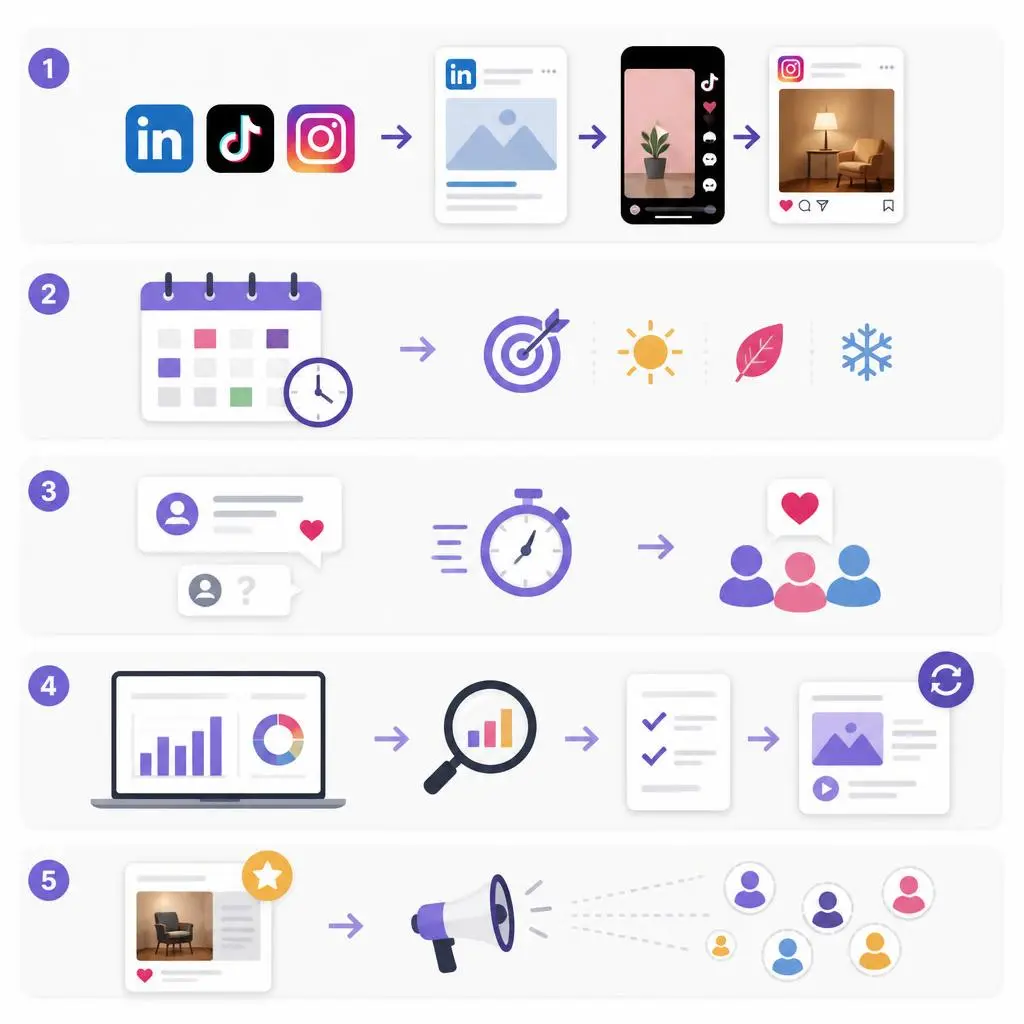
1. Platform-Specific Strategy
What works on LinkedIn won’t work on TikTok. A strong management approach builds a distinct content style per platform instead of cross-posting the same content everywhere.
2. Consistent Content Calendar
Random posting kills momentum. A planned calendar – built around business goals, seasonal trends, and platform algorithms – keeps growth steady instead of sporadic.
3. Community Engagement
Replying to comments and DMs within a few hours (not days) significantly boosts algorithmic reach and customer trust. This is often the most neglected part of DIY social media.
4. Data-Driven Adjustments
Every platform provides analytics. The difference between brands that grow and brands that stall is whether someone is actually reviewing that data monthly and adjusting the content mix.
5. Paid Amplification
Even great organic content has a ceiling. Small, targeted ad spend behind top-performing posts extends reach to people who’d never find the brand otherwise.
DIY vs. Professional Social Media Management
Factor | DIY | Professional Management |
Time investment | 5–10+ hrs/week | Minimal (owner reviews, doesn’t execute) |
Consistency | Often inconsistent | Structured calendar, always on schedule |
Strategy depth | Limited to owner’s knowledge | Data-backed, platform-specific |
Growth speed | Slower, plateaus quickly | Faster, compounding over months |
Cost | “Free” (but costs owner’s time) | Fixed monthly investment |
DIY makes sense for very early-stage brands testing their voice. Once a business is serious about using social media as a growth channel, professional management almost always outperforms it – because it’s run as a system, not a side task.
How to Choose a Social Media Management Approach That Works
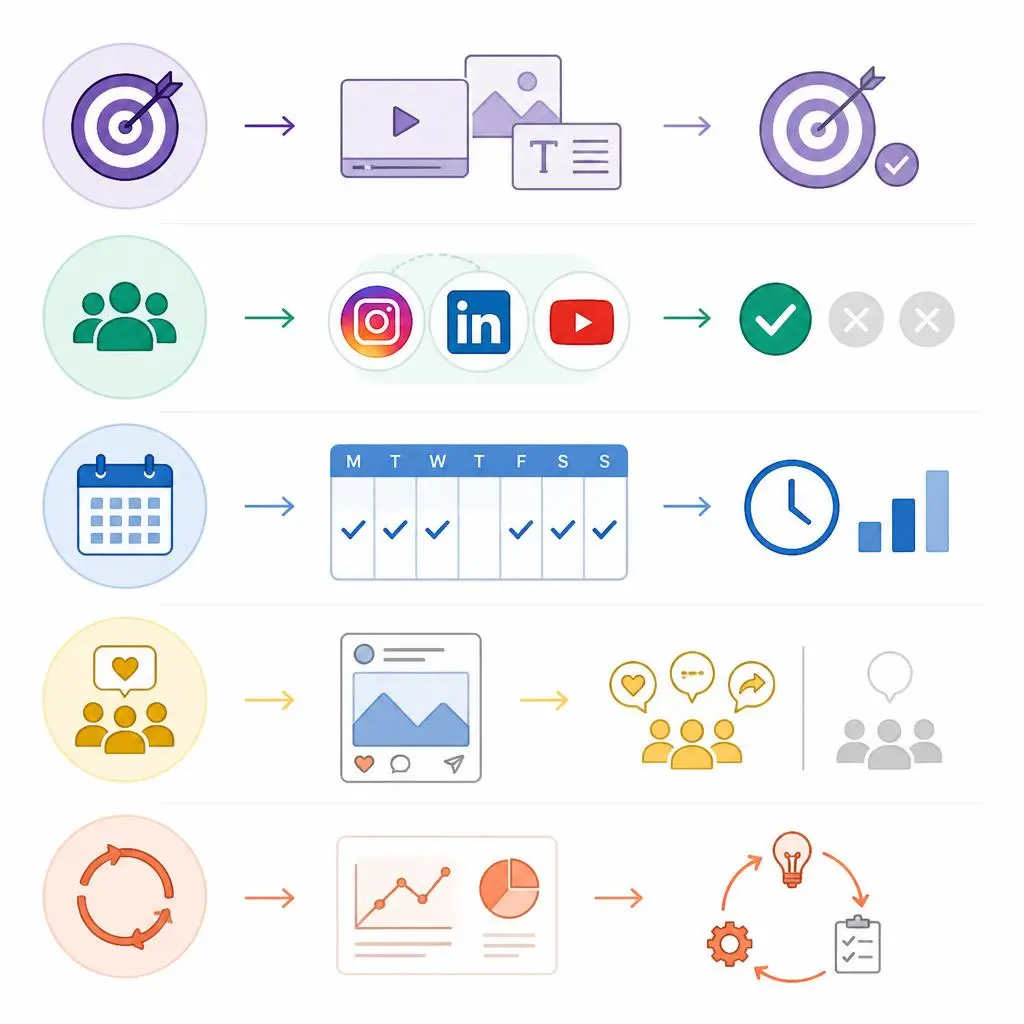
- Define the actual goal – brand awareness, leads, sales, or community building all require different content strategies.
- Pick 2–3 platforms max – spreading thin across five platforms produces weak content everywhere.
- Commit to a real content calendar – sporadic posting is worse than a lower, consistent frequency.
- Track engagement, not just followers – a smaller, engaged audience outperforms a large, passive one.
- Review and adjust monthly – what worked in January often won’t work by June.
Conclusion
Social media management in 2026 is a full system – strategy, content, engagement, and data – not just scheduled posts. Businesses that treat it that way consistently outperform those posting randomly and hoping for reach.
Ready to build a social presence that actually grows your business? visit zebuck.com or services– or Contact us to talk strategy.
FAQs
- What does a social media manager actually do day-to-day? They plan content calendars, create or oversee content production, schedule posts, respond to comments/messages, monitor analytics, and adjust strategy based on performance.
- How much should a small business budget for social media management? It varies widely by scope, but most small businesses see solid results starting with a focused 2–3 platform strategy rather than spreading budget across everything at once.
- How often should a business post on social media? 3–5 times per week per platform is a solid baseline in 2026 – consistency matters more than volume.
- Can AI tools replace a social media manager? AI speeds up content production, but strategy, brand voice, community engagement, and data interpretation still need human judgment to avoid generic, forgettable content.
- Which social media platform is best for a small business in 2026? It depends on the audience – Instagram and TikTok work well for consumer brands, while LinkedIn is stronger for B2B and service-based businesses.
- How long does it take to see results from social media management? Meaningful engagement growth often starts within 4–8 weeks of consistent, strategic posting; measurable business impact (leads/sales) typically follows within 2–3 months.
- What’s the biggest mistake businesses make with social media? Posting inconsistently and ignoring engagement – algorithms and audiences both reward brands that show up reliably and respond, not just publish.
- Should every business be on every social platform? No. Being active on 2–3 platforms where the target audience actually spends time outperforms a thin presence across every network.